


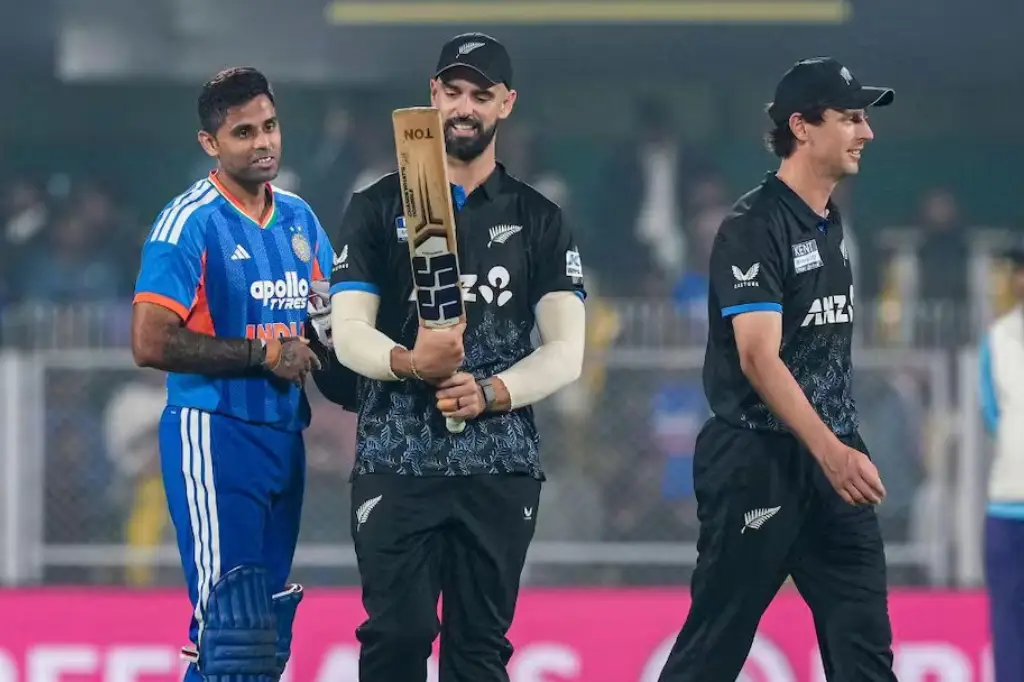
A High-Scoring Night in Visakhapatnam Defines the Series Narrative
We witnessed a thrilling encounter in the IND vs NZ 4th T20 match, where the New Zealand cricket team delivered a commanding performance to register a memorable win against India. Although the five-match T20 series had already been sealed by India, the fourth match at Visakhapatnam brought renewed intensity, individual brilliance, and tactical depth that captured global cricketing attention.
This contest was not merely about the result; it was about momentum, experimentation, and asserting dominance ahead of the series finale. New Zealand rose to the occasion with bat and ball, outplaying India in key phases and proving their resilience on Indian soil.
Match Overview: IND vs NZ 4th T20 at Visakhapatnam
The fourth T20 International was played under ideal batting conditions, with a flat pitch and a fast outfield encouraging stroke play. Winning the toss, India opted to bowl first, aiming to restrict New Zealand and chase under lights. However, the Kiwi batters had different plans.
New Zealand posted a formidable 215 runs for the loss of 7 wickets in 20 overs, putting India under immediate pressure. Despite flashes of resistance, India’s batting unit failed to sustain momentum, collapsing for 165 runs in 18.4 overs, handing New Zealand a well-earned victory.
Team Changes and Tactical Decisions
India made a notable change ahead of the match, with Ishan Kishan being left out and Arshdeep Singh included in the playing XI. The move was aimed at strengthening the bowling attack and testing bench strength, given the series context.
New Zealand, on the other hand, maintained a balanced lineup, focusing on batting depth and disciplined bowling rotations, which ultimately paid dividends.
New Zealand Batting Dominance: A Clinical Powerplay and Middle Overs Assault
Tim Seifert’s Explosive Knock Sets the Tone
At the heart of New Zealand’s innings was Tim Seifert, who played a sensational knock of 62 runs off just 36 balls. His innings was defined by clean hitting, sharp placement, and fearless intent, especially during the powerplay overs.
Seifert’s ability to counter both pace and spin disrupted India’s bowling plans early, forcing frequent field changes and defensive lines.
Solid Support from Conway and Mitchell
Seifert received excellent support from Devon Conway, who contributed a composed 44 runs, anchoring the innings while maintaining a healthy strike rate. Daryl Mitchell added further stability with 39 crucial runs, ensuring New Zealand never lost momentum during the middle overs.
Together, the trio built partnerships that kept the scoreboard ticking and applied relentless pressure on the Indian bowlers.
Indian Bowling Effort: Flashes of Brilliance Amidst Pressure
Despite the high total conceded, there were notable performances in India’s bowling unit. Arshdeep Singh and Kuldeep Yadav stood out, claiming two wickets each and attempting to stem the run flow during critical phases.
While the bowlers struggled with consistency, their efforts prevented New Zealand from breaching the 230-run mark, which could have made the chase even more daunting.
Fielding Highlights: Rinku Singh’s Exceptional Athleticism
One of the standout moments of the match came from Rinku Singh, who delivered an extraordinary fielding performance by taking five catches. His alertness, safe hands, and sharp reflexes significantly contributed to restricting New Zealand’s total.
Rinku’s fielding display reinforced the importance of athleticism and intensity in modern T20 cricket, earning widespread praise from fans and analysts alike.
India’s Run Chase: Early Collapse and Missed Opportunities
A Shocking Start for the Indian Batting Lineup
India’s chase got off to the worst possible start as Abhishek Sharma was dismissed on the very first ball. The early wicket set the tone for a troubled innings, with the top order failing to establish partnerships.
Frequent wickets and mounting pressure disrupted India’s rhythm, making the required run rate increasingly unmanageable.
Shivam Dube’s Lone Resistance
Amidst the collapse, Shivam Dube emerged as the lone warrior, scoring a valiant 65 runs. His innings showcased power hitting, composure, and determination, briefly raising hopes of an improbable comeback.
However, the lack of support from the other end meant Dube’s efforts ultimately went in vain.
New Zealand Bowling: Discipline, Variation, and Execution
New Zealand’s bowlers executed their plans with remarkable precision. By mixing pace variations, tight lines, and strategic field placements, they choked India’s scoring opportunities.
Regular breakthroughs ensured that India never settled into a rhythm, leading to a complete all-out at 165 runs in 18.4 overs. The bowling unit’s collective effort highlighted New Zealand’s adaptability and tactical awareness in subcontinental conditions.
Key Takeaways from IND vs NZ 4th T20 Match
- New Zealand’s batting depth proved decisive on a high-scoring surface
- India’s top-order vulnerability was exposed under pressure
- Tim Seifert’s aggressive approach set the benchmark for T20 opening batsmanship
- Fielding excellence, especially from Rinku Singh, remained a positive for India
- Series context allowed experimentation, but execution favored New Zealand
What This Win Means for New Zealand
Although the series outcome remains unchanged, this victory provides New Zealand with a significant morale boost. Winning in India, even in a dead rubber, reinforces confidence and highlights the team’s ability to adapt and compete against top-ranked opponents.
For India, the match serves as a valuable learning experience, offering insights into squad depth, player combinations, and areas requiring refinement ahead of future international assignments.
Conclusion: A Statement Performance in the IND vs NZ 4th T20
The IND vs NZ 4th T20 match will be remembered as a game where New Zealand outplayed India in all departments. From explosive batting to disciplined bowling and sharp fielding, the visitors delivered a comprehensive performance that resonated beyond the scorecard.
As the series moves forward, this match stands as a reminder that in T20 cricket, execution on the day outweighs reputations, and every game presents an opportunity to redefine momentum.